
Mitigating Lithium-Ion Risks
As e-bike and e-scooter use continues to grow, so does concern about lithium-ion battery fires—particularly in apartments, condos, and other multifamily properties.
New York City has seen a significant number of lithium-battery fires and fatalities, including a 2023 fire at an e-bike repair shop that spread to residential apartments above it.
The issue isn't limited to New York. E-bike and e-scooter adoption is growing rapidly throughout the Pacific Northwest, too, with record ridership in Seattle and e-bikes making up a growing share of bike trips in Portland.
A Growing Concern for Multifamily Properties
E-bikes and e-scooters offer residents an affordable, convenient, and environmentally friendly way to get around. But damaged, defective, or improperly charged lithium-ion batteries can create serious fire risks.
These fires can be extremely difficult to extinguish because of thermal runaway—a self-sustaining chain reaction that can cause batteries to burn intensely and rapidly.
For property owners and managers, the challenge is how to support residents who use e-bikes while reducing the risks associated with charging them inside apartments, hallways, or other unregulated areas.
A Safer Approach to E-Bike Charging
Simply banning indoor charging doesn't necessarily solve the problem. Residents still need somewhere to charge their batteries.
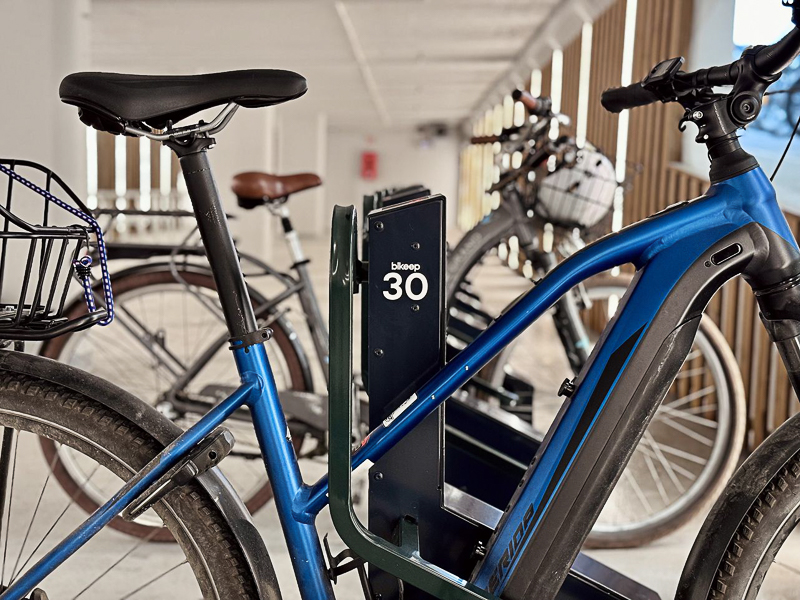
Dedicated e-bike parking and charging infrastructure provides a safer alternative. Solutions from Bikeep and PowerShelter can provide secure, designated areas for storing and charging e-bikes and batteries.
Installing charging docks or enclosed charging stations in a designated garage or outdoor area can also make it easier for properties to prohibit charging inside individual units and common areas.
Most importantly, commercial-grade infrastructure replaces makeshift extension cords and power strips with a purpose-built, secure charging environment—helping property managers reduce risk while providing a valuable amenity for residents.
The goal isn't simply to ban e-bike charging. It's to provide a safer place to do it.
What Should Property Managers Consider?
If your property has residents storing or charging e-bikes, take a closer look at where and how charging is happening today. Consider whether your current policies, storage areas, and electrical infrastructure provide a safe and practical solution.
A designated e-bike charging area can be an important part of a property's overall approach to battery safety.
Recent Comments